
Overview
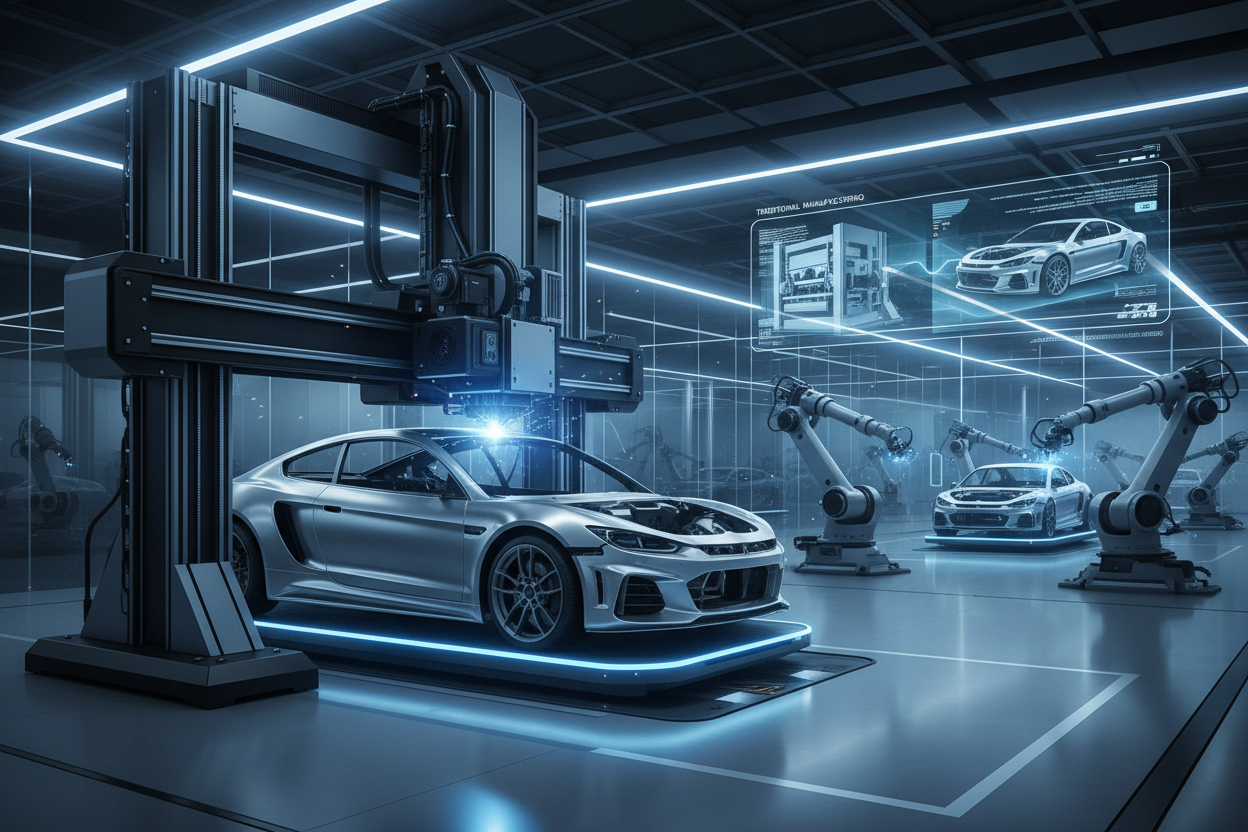
3D printing is revolutionizing the automotive industry by providing reduced production costs, shorter lead times, design flexibility, customization, and eco-friendly production methods. Key applications include prototyping, production of spare parts, and end-use components. Despite challenges like material limitations and quality control, the future of 3D printing in automotive manufacturing looks promising with advancements in technology and increasing demand for electric vehicles and personalized products.
Frequently Asked Questions
1. What is 3D printing in the automotive industry?
2. What are the main advantages of using 3D printing in car manufacturing?
3. How does 3D printing impact the prototyping phase of car manufacturing?
4. What are some real-world applications of 3D printing in the automotive sector?
5. What future trends are expected for 3D printing in the automotive industry?
In recent years, the automotive industry has witnessed significant advancements, particularly with the integration of 3D printing technology. As car manufacturers strive for innovation, the impact of 3D printing on car manufacturing is a game-changer, offering numerous benefits from design flexibility to cost efficiencies. This article delves into the advantages and future trends associated with 3D printing in the automotive sector. Buckle up as we take you through this revolutionary journey!
Understanding 3D Printing in the Automotive Industry
3D printing, or additive manufacturing, refers to the process of creating three-dimensional objects from a digital design. This technology enables manufacturers to build intricate structures layer by layer, which can substantially lower production costs and lead times. In the automotive industry, 3D printing is increasingly being utilized for a variety of applications ranging from prototyping to producing end-use parts.
The Advantages of 3D Printing in Car Manufacturing
The impact of 3D printing on car manufacturing can be attributed to several key advantages:
- Reduced Production Costs: Traditional manufacturing processes often require expensive molds and tooling. 3D printing eliminates these costs, allowing manufacturers to produce high-quality car components at a lower price.
- Shortened Lead Times: The speed of 3D printing means that parts can be produced much faster. This rapid prototyping capability allows for quicker design iterations and accelerates the overall production schedule.
- Design Flexibility: 3D printing enables manufacturers to create complex geometries and lightweight structures that are often impossible with traditional manufacturing methods. This opens up new possibilities for innovative designs.
- Customization: 3D printing allows for the easy customization of car parts, catering to specific consumer needs or preferences. This level of personalization was difficult to achieve with traditional methods.
- Eco-Friendly Production: The additive nature of 3D printing means that material waste is significantly reduced compared to subtractive manufacturing processes. This not only makes 3D printing more sustainable but also aligns with the automotive industry's push towards greener practices.
The Role of 3D Printing in Prototyping and Design
One of the most significant impacts of 3D printing is in the prototyping phase of car manufacturing. In the traditional setup, creating prototypes can be time-consuming and costly, often taking weeks or even months. With 3D printing, engineers can quickly produce prototypes, allowing them to test and refine designs more efficiently. This streamlined process also leads to better product outcomes, as designers can identify and rectify potential issues at an early stage.
From Concept to Reality: The 3D Printing Process
The journey from concept to finished product involves several steps, highlighted by the use of 3D printing:
- Design: The initial design is created using computer-aided design (CAD) software. This digital model serves as the blueprint for the 3D printed part.
- Material Selection: Choosing the right material is crucial. Engineers can select from a range of plastics, metals, or even composite materials based on the required properties.
- 3D Printing: The design is translated into a 3D object using techniques such as Fused Deposition Modeling (FDM) or Selective Laser Sintering (SLS).
- Post-Processing: Once printed, components may require finishing processes such as sanding, painting, or assembly, to ensure optimal performance.
- Testing: Rigorous testing follows to verify the part's efficiency, strength, and durability.
Real-World Applications of 3D Printing in the Automotive Sector
The adoption of 3D printing in car manufacturing is not just theoretical; various manufacturers are already leveraging this innovative technology in several applications:
Production of Spare Parts
Manufacturers can utilize 3D printing for producing spare parts on-demand. This approach not only reduces inventory costs but also allows remote factories to create critical components without the need for extensive physical stock.
Tooling and Jigs
3D printed tooling and jigs streamline the assembly process in manufacturing plants. Custom tools can be printed quickly and with precision, enhancing production efficiency and improving the working conditions for factory employees.
End-Use Parts
Some pioneering brands have begun producing end-use components directly via 3D printing. These parts often include lightweight brackets, clips, and even interior components, showcasing the feasibility of this technology in mass production.
Challenges and Considerations for 3D Printing in Car Manufacturing
Despite its numerous benefits, the integration of 3D printing in car manufacturing does not come without challenges. Understanding these challenges is essential for manufacturers looking to optimize their operations:
- Material Limitations: While material options are expanding, there's still a limited selection compared to traditional manufacturing processes, which might restrict 3D printed components' application.
- Quality Control: Ensuring consistent quality across production runs can be difficult with 3D printing. Manufacturers must invest in quality control measures to monitor and maintain standards.
- Regulatory Compliance: The automotive industry is heavily regulated, and meeting compliance through 3D printed components can be complex. Manufacturers need to navigate these regulations diligently.
- Education and Training: As 3D printing technology evolves, there is a constant need for skilled labor. Manufacturers must ensure their workforce is well-trained to operate and maintain these systems.
The Future of 3D Printing in the Automotive Industry
As the automotive landscape continues to shift towards more sustainable and efficient practices, 3D printing is poised to play an even larger role. Innovations in material science, automation, and robotics will further enhance the capabilities of 3D printing, expanding its applications within the automotive sector.
Autonomous Manufacturing and 3D Printing
With the rise of Industry 4.0, the concept of autonomous manufacturing is gaining traction. In this scenario, 3D printing will integrate seamlessly with artificial intelligence (AI) and the Internet of Things (IoT) to create smart factories. These interconnected systems will monitor production in real-time, enhancing efficiency and reducing downtime.
The Push for Electric Vehicles
As electric vehicles (EVs) become more prevalent, 3D printing's lightweight designs will aid in improving battery performance and overall range. Additionally, the ability to quickly produce components for EVs enables manufacturers to respond efficiently to market changes and consumer demands.
Mass Customization
With consumers increasingly seeking personalized products, 3D printing could enable mass customization in the automotive industry. Manufacturers can easily adapt designs to create unique vehicle features, giving customers greater choice while maintaining efficient production.
Riding the Wave of Innovation
The impact of 3D printing on car manufacturing is both profound and transformative. Offering benefits from reduced costs and lead times to enhanced customization, 3D printing paves the way for innovation in the automotive sector. While challenges exist, the continued evolution of this technology promises exciting prospects for the future. As manufacturers embrace these advancements, they will undoubtedly shape a new era of automotive production, making it not only smarter but also more responsive to consumer demands.
Join us on this exciting journey as we explore further innovations and advancements within the automotive industry. Stay tuned for more insights on how technology is steering the future of car manufacturing!