
Overview
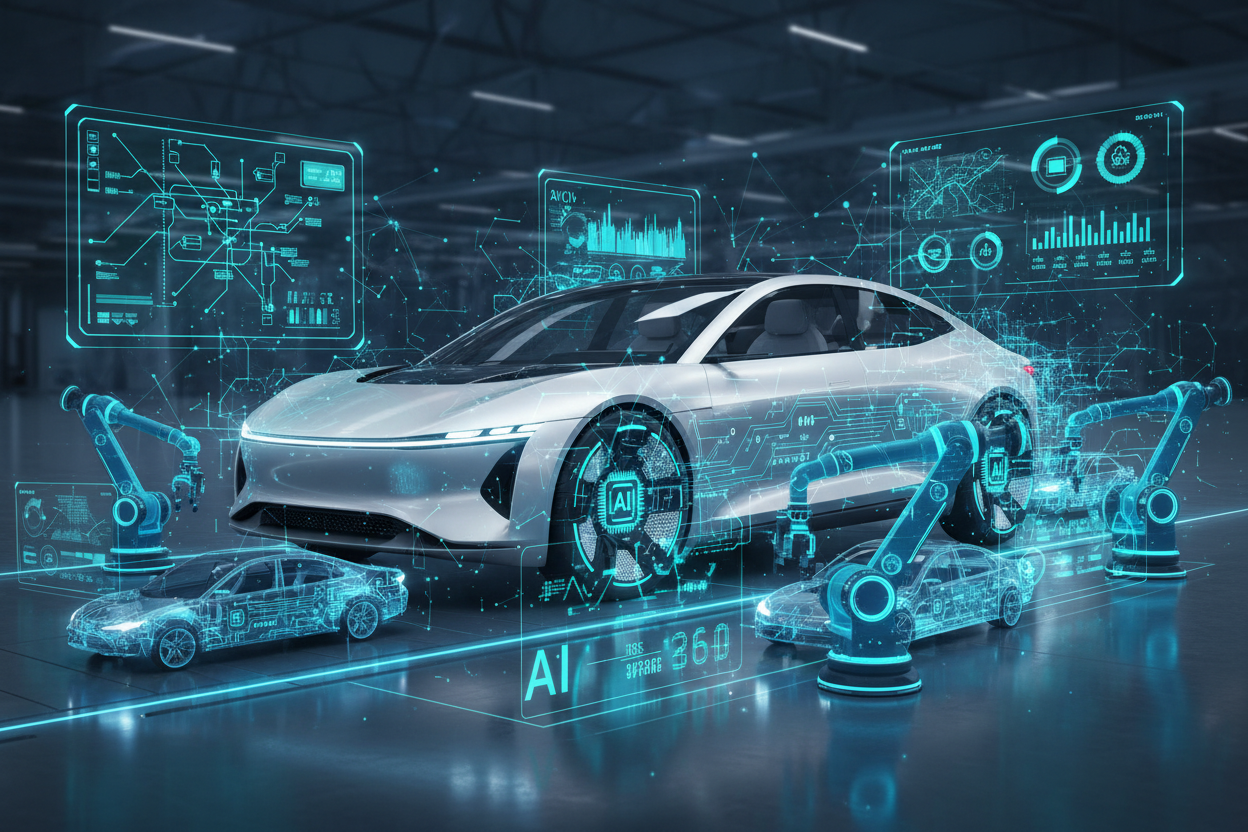
AI is transforming the automotive industry by enhancing manufacturing efficiency, redefining user experiences, and driving advancements in autonomous vehicles. Key applications include predictive maintenance, robotic automation, smart assistants, advanced navigation, and personalized marketing. While AI offers numerous benefits, challenges like data privacy and infrastructure adaptation must be addressed. Embracing AI is essential for companies to remain competitive and improve customer satisfaction.
Frequently Asked Questions
1. How is AI transforming automotive manufacturing?
2. What role does AI play in user experience within vehicles?
3. How does AI contribute to the development of autonomous vehicles?
4. What are some applications of AI in automotive retail?
5. What challenges does the automotive industry face with AI integration?
The automotive industry is witnessing a seismic shift, driven by the integration of Artificial Intelligence (AI). From manufacturing to user experience, AI is revolutionizing every facet of automotive operations. This article delves into how AI is reshaping the automotive landscape, empowering businesses and enhancing consumer experiences. Let’s explore the myriad ways AI technology is carving a new path in this dynamic industry.
The Rise of AI in Automotive Manufacturing
The journey of AI in the automotive sector begins on the manufacturing floor. Automotive companies are harnessing AI technologies to streamline production processes, reduce costs, and enhance quality. Here’s how:
Predictive Maintenance
One of the most significant contributions AI has made to manufacturing is predictive maintenance. This involves using AI algorithms to analyze data from machines and predict when a piece of equipment is likely to fail. By monitoring the condition of machinery in real-time, manufacturers can perform maintenance proactively, preventing costly downtime and extending the life of their equipment.
Robotic Automation
Robots have long been a staple in automotive manufacturing, but AI is taking automation to the next level. AI-driven robots are now capable of learning and adapting to complex tasks. They can work alongside human workers, increasing efficiency while maintaining high-quality standards. This synergy between human and machine is paving the way for smarter factories.
Quality Control
Ensuring the quality of every vehicle produced is crucial. AI enhances quality control processes through the use of computer vision. By deploying AI systems equipped with visual recognition capabilities, manufacturers can identify defects that would be invisible to the naked eye. This not only speeds up the quality assurance process but also significantly reduces the number of faulty vehicles that make it to the consumer market.
Redefining User Experience with AI
Beyond manufacturing, AI is also reshaping consumer interactions with vehicles. From personalized features to improved safety, the integration of AI is creating a more engaging and safer driving experience.
Smart Assistants
Many modern vehicles now come equipped with AI-powered smart assistants. These systems are capable of learning the preferences of drivers and passengers over time. Whether it's adjusting climate controls, suggesting routes, or playing specific playlists, these assistants create an enhanced, tailored driving experience that resonates with consumer lifestyles.
Advanced Navigation
AI is revolutionizing how drivers navigate on the road. Advanced navigation systems analyze real-time traffic data, weather conditions, and user preferences to provide the most efficient routes. This technology not only saves time but also reduces fuel consumption, making every drive smoother and more environmentally friendly.
Enhanced Safety Features
Safety is paramount in the automotive industry, and AI plays a crucial role in enhancing vehicle safety. Features like automatic emergency braking, lane departure warnings, and adaptive cruise control are powered by AI technologies. These systems utilize sensors and cameras to monitor surroundings, providing drivers with timely alerts and even taking control of the vehicle in critical situations.
AI in Autonomous Vehicles
The most talked-about application of AI in the automotive space is undoubtedly in the realm of autonomous vehicles. Self-driving cars have transitioned from a distant dream to a tangible reality, thanks to AI advancements.
Machine Learning and Sensor Fusion
At the heart of autonomous vehicle technology lies machine learning and sensor fusion. Self-driving cars use a combination of radar, LiDAR, and camera technologies to perceive their environment. AI algorithms integrate this diverse data to create a coherent picture of the surroundings, allowing the vehicle to make informed driving decisions.
Real-time Decision Making
Autonomous vehicles need to make split-second decisions. AI enables cars to analyze various scenarios and choose the safest action by processing vast amounts of information instantly. For instance, if a pedestrian suddenly crosses the road, AI systems can evaluate the situation and react much faster than a human driver could.
The Future of AI in Automotive Retail
The automotive retail sector is not immune to the AI revolution. Showrooms and dealerships are increasingly leveraging AI-driven insights to create a better buying experience for customers.
Personalized Marketing
AI-driven analytics help dealerships tailor their marketing strategies. By analyzing consumer behavior and preferences, AI systems can deliver personalized advertisements and offers to potential buyers. This ensures that marketing efforts are more effective, leading to higher conversions and customer satisfaction.
Virtual Showrooms
The rise of virtual reality (VR) and augmented reality (AR) powered by AI is transforming how car buyers explore vehicles. Prospective buyers can now experience vehicles in a virtual environment, examining features and upgrades without ever stepping foot in a dealership. This adds convenience and caters to the emerging preference for online car shopping.
Challenges and Considerations
While AI presents numerous advantages, the automotive industry must also navigate several challenges related to its integration:
Data Privacy
The collection and utilization of data are central to AI functionality. However, this raises concerns regarding data privacy. Automotive companies need to establish strong data governance frameworks to protect customer information while complying with regulations.
Infrastructure Adaptation
Integrating AI requires substantial investment in infrastructure. Many companies may find it challenging to adapt their existing systems and processes to accommodate AI technologies. It’s essential for businesses to strategically plan their AI implementation to avoid disruptions.
The Bottom Line: Embracing Change
The automotive industry is on the brink of a technological renaissance. As AI continues to evolve, it promises to redefine how vehicles are made, how they perform on the road, and how consumers shop for them. Embracing this change is no longer optional; it’s a necessity for those looking to thrive in an increasingly competitive landscape. In a world where efficiency and customer satisfaction reign supreme, AI stands as a powerful ally. Automotive companies that embrace this technology will not only enhance operational capabilities but will also create enriched experiences for consumers, thereby solidifying their position in the market. The journey has just begun, and the future is undoubtedly bright for an industry on the cutting edge of innovation.