
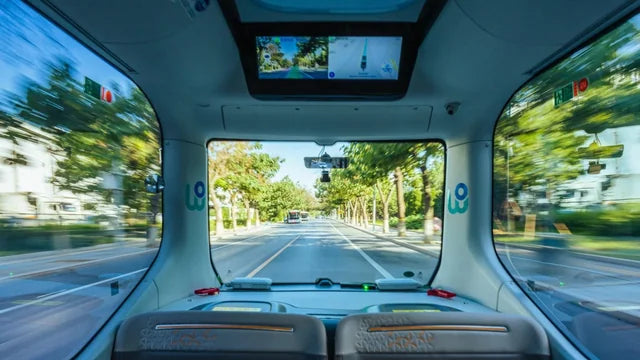
Frequently Asked Questions
1. What are autonomous vehicles (AVs)?
2. What are the different levels of driving automation?
3. Who are the major players in the autonomous vehicle industry?
4. What challenges do autonomous vehicles face?
5. What does the future of autonomous vehicles look like?
The automotive industry is undergoing a revolutionary transformation, driven by the race for autonomous vehicle technology. As manufacturers and tech companies worldwide invest in artificial intelligence, machine learning, and connected infrastructure, the prospect of completely self-driving cars is becoming increasingly tangible. In this article, we will take an expansive look at the major players in this race, the challenges they face, and what the future holds for autonomous vehicles on global roads.
Understanding Autonomous Vehicles
Before diving into the global race, it is essential to understand what autonomous vehicles (AVs) are. At its core, an autonomous vehicle is one that can navigate and drive itself without human intervention. This capability relies on a combination of sensors, cameras, radar, and sophisticated algorithms that interpret data and make real-time decisions.
Levels of Autonomy
The Society of Automotive Engineers (SAE) defines six levels of driving automation, ranging from Level 0 (no automation) to Level 5 (full automation). Here is a brief overview of these levels:
- Level 0: No Automation – The human driver is in complete control.
- Level 1: Driver Assistance – The vehicle may assist the driver with either steering or acceleration/deceleration.
- Level 2: Partial Automation – The vehicle can control both steering and acceleration/deceleration, but the human driver must remain engaged.
- Level 3: Conditional Automation – Under certain conditions, the vehicle can manage all aspects of driving, but the human must be ready to take control.
- Level 4: High Automation – The vehicle can drive itself in most situations without any human intervention, though it still may require a human to take over in certain conditions.
- Level 5: Full Automation – The vehicle is fully autonomous and requires no human interaction whatsoever.
The Major Players in the Autonomous Vehicle Arena
The race for developing viable autonomous vehicle technology is not limited to traditional automakers; it includes tech giants, startups, and partnerships across various sectors. Let’s take a closer look at some of the key players in this space.
Tesla
Tesla has emerged as a dominant force in the autonomous vehicle market thanks to its ambitious “Full Self-Driving” (FSD) initiative. Although Tesla vehicles primarily operate at Level 2 or Level 3 autonomy currently, they have been increasingly pushing their fleet towards higher levels of automation through software updates. The data collected from millions of miles driven by Tesla cars is invaluable in refining their algorithms, making them one of the frontrunners in the AV race.
Waymo
Waymo, a subsidiary of Alphabet Inc. (Google's parent company), is a notable pioneer in this field, having developed an extensive amount of real-world experience with its self-driving technology. Waymo operates fully autonomous taxi services in specific areas and continues to expand its reach, providing insights into the complexities of urban navigation and passenger safety.
Audi and Volkswagen
The Volkswagen Group, which includes Audi and Porsche, is heavily investing in autonomous technology. Their commitment to electric and autonomous vehicles is evident in the development of various prototypes and concepts, enhancing their competitive edge in the global market.
General Motors and Cruise
General Motors has turned its attention to the AV sector, particularly with its acquisition of Cruise Automation. The company aims to launch a fully autonomous ride-hailing service in the near future and is rapidly advancing its technology through partnerships and testing in urban environments.
Global Initiatives and Collaborations
The push towards autonomous vehicles extends far beyond individual companies. Governments, universities, and research institutions worldwide are collaborating with tech firms to develop legislation, infrastructure, and research that supports the growth of this transformative technology.
United States
The U.S. is a significant player in the autonomous vehicle landscape, with numerous initiatives across various states. States like California and Arizona have become hubs for testing AV technology, allowing companies to operate pilot programs with specific regulations. The federal government is also actively working on establishing guidelines to ensure the safe deployment of autonomous vehicles on highways.
Europe
In Europe, countries such as Germany and the Netherlands have started extensive research on AV technology, focusing on regulation, safety, and integration with public transport. The European Union is encouraging collaboration among member states to create a cohesive regulatory framework to allow seamless rollouts of autonomous vehicles throughout the continent.
China
China is advancing rapidly in the race for autonomous vehicle technology, with tech giants like Baidu and Alibaba entering the fray alongside traditional automakers. The Chinese government is heavily investing in policies and infrastructure that will support the widespread adoption of AVs, aiming to establish the country as a global leader in this space.
Challenges Facing the Industry
As promising as autonomous vehicles may sound, several challenges must be addressed before they can become a ubiquitous part of our daily lives.
Regulatory Hurdles
Government regulations vary widely across countries and even within regions of the same country. These discrepancies can slow the deployment of AV technology. For instance, liability laws need to be established clearly to determine the roles and responsibilities of manufacturers, developers, and drivers in the event of an accident involving an autonomous vehicle.
Technological Limitations
Although significant advancements have been made in sensor technology and artificial intelligence, challenges remain. AVs must be able to navigate complex environments, interpret diverse driving conditions, and handle unpredictable human behaviors, all while ensuring passenger safety.
Public Perception
Another obstacle is public perception. Many people remain skeptical about the safety and reliability of autonomous vehicles. Concerns about cybersecurity, potential job losses in driving professions, and ethical decision-making algorithms all contribute to hesitance regarding the acceptance of AV technology.
The Future of Autonomous Vehicles
Despite the challenges ahead, the future of autonomous vehicles looks promising. As technology continues to evolve, so too will the strategies and regulations that govern their use. The transformation of transportation is reshaping our cities, all while promising increased safety, efficiency, and accessibility.
Integration with Smart Cities
One of the most exciting prospects of autonomous vehicles is their potential to integrate with smart city infrastructures. Imagine a city where traffic lights synchronize with autonomous cars to optimize traffic flow, emergency vehicles have dedicated paths, and there is no need for parking places since the vehicles can drop passengers off and find parking elsewhere autonomously. This seamless integration would reduce congestion, lower emissions, and provide an entirely new urban living experience.
Environmental Impact
Autonomous vehicles also hold the promise of contributing to environmentally friendly initiatives. With enhanced efficiency and intelligent route planning, these vehicles can reduce fuel consumption and greenhouse gas emissions. In combination with electric vehicle technology, the widespread adoption of AVs could be a game-changer in our battle against climate change.
Charting a Course for the Road Ahead
The quest for autonomy in vehicles reflects much more than just the novelty of self-driving cars; it embodies a massive shift in mobility, sustainability, and urban development that will impact multiple industries and societal norms. The next few years will be critical as companies and governments navigate the complexities of making this technological marvel a reality. As consumers, experts, and legislators work together, we can anticipate a world where transport is not only efficient but also accessible and safe for everyone.
If you are curious about how these technological advancements will impact the future of the automotive industry and beyond, stay tuned. The journey to fully autonomous vehicles is not just about technology; it’s about reimagining our roadways and the world we inhabit.