
Overview
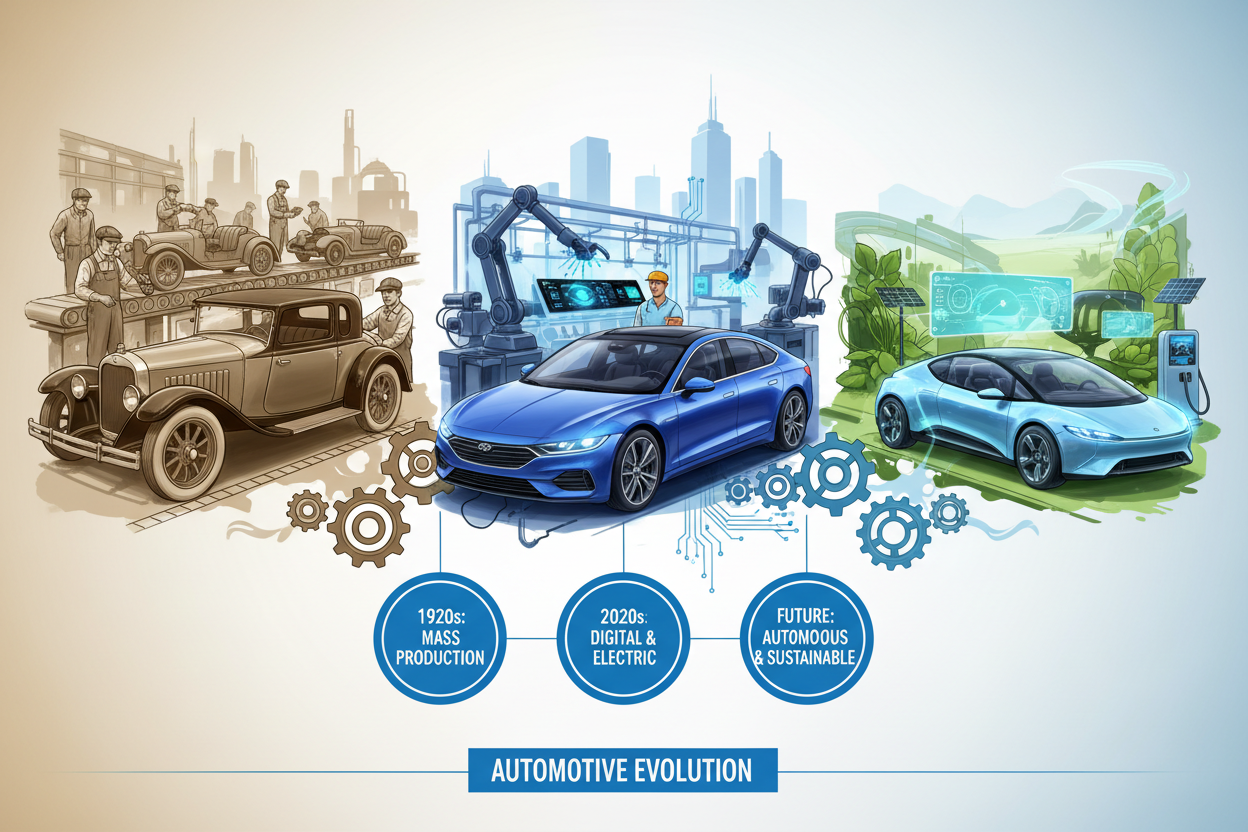
The automotive industry has evolved from the invention of the first gasoline-powered vehicles in the late 19th century to today's focus on electric and autonomous cars. Key phases include the rise of assembly line production, design and safety innovations, challenges from the oil crisis, and a shift towards eco-friendly technologies. As we look to the future, trends like smart transportation, sustainability, and enhanced user experiences will shape the industry, requiring global collaboration to address challenges and consumer demands.
Frequently Asked Questions
1. What is the origin of the automotive industry?
2. What major advancements occurred during the golden age of automobiles?
3. How did the oil crisis affect the automotive industry in the 1970s?
4. What technological innovations have shaped the modern automotive industry?
5. What are some emerging trends influencing the future of the automotive industry?
Welcome to an exploration of the fascinating journey of the automotive industry. This sector has seen tremendous transformations over the years, shaping not only how we travel but also impacting economies, cultures, and the environment. Whether you're a car enthusiast, a budding entrepreneur in the sector, or simply curious about the future of mobility, this blog will provide insights into the past, present, and future of automotive innovation.
The Birth of the Automotive Industry
The automotive industry began in the late 19th century with the introduction of the first gasoline-powered vehicles. Karl Benz is often credited for inventing the first true automobile in 1885. The design featured a simple internal combustion engine and revolutionized the way people viewed personal transport.
At this time, the industry was clearly in its infancy, populated by a handful of inventors and visionaries. The early 1900s saw the introduction of assembly line production methods which accelerated vehicle manufacturing and lowered costs, making cars accessible to the masses. Henry Ford’s Model T, released in 1908, epitomized this era, allowing ordinary individuals to own a vehicle for the first time.
The Golden Age of Automobiles
The 1920s through the 1950s, often deemed the golden age of automobiles, witnessed immense growth and technological advancement. The market expanded globally, leading to the establishment of numerous brands, each vying for consumer attention.
- Design Innovations: Sleeker designs and better aerodynamics emerged.
- Safety Features: Introduction of seatbelts and more effective braking systems.
- Power Innovations: Advancements in engine technology increased power and efficiency.
This era was marked by iconic models from brands like Chevrolet, Ford, and Volkswagen. Consumers began to associate vehicles with luxury and personal identity. It was a time of cultural significance, as cars became a symbol of freedom and individuality.
Challenges of the 1970s and 1980s
The 1970s presented several challenges that transformed the automotive landscape dramatically. The oil crisis introduced a major shift in consumer preferences towards fuel efficiency. As a result, manufacturers began producing smaller, more economical vehicles, distrusting the large, gas-guzzling cars that had dominated the market.
Environmental Awareness
As awareness of environmental issues grew, so did the regulatory framework around vehicle emissions and safety standards. Governments began imposing stricter regulations, pushing automakers to innovate in areas like fuel economy and exhaust systems. The introduction of catalytic converters and electronic fuel injection were pivotal in this transformation.
The Modern Automotive Industry
Fast forward to the 1990s and early 2000s, where the automotive industry transitioned into a more tech-focused environment. The advent of digital technology drastically changed manufacturing processes and vehicle design.
- Integration of Technology: GPS, digital displays, and Bluetooth connectivity became commonplace.
- Safety Tech: Features like anti-lock braking systems (ABS) and airbags evolved, saving countless lives on the roads.
- Eco-Friendly Innovations: The rise of hybrids, led by models like the Toyota Prius, established a new consumer interest in eco-friendliness.
The real challenge during this era was balancing consumer demands for technology and preference shifts toward environmental sustainability. Automakers began investing in research and development specifically focused on creating smarter, greener vehicles.
The Role of Innovation in the 21st Century
As we entered the 21st century, innovation became the beating heart of the automotive industry. Every aspect of vehicle production was re-examined, from sustainability in manufacturing to cutting-edge technologies that enhance drivability.
Electric Vehicles: A Game Changer
The surge of electric vehicles (EVs) is arguably the most influential trend in the modern automotive industry. Companies like Tesla have not only successfully proven the viability of electric cars but have also redefined consumer expectations regarding performance, range, and technology. The technological advancements that allow batteries to charge faster and provide longer range continue to push the industry forward.
Autonomous Driving: The Future is Now
Another groundbreaking innovation is the advancement in autonomous driving technology. Major companies, including traditional automotive giants and tech disruptors, are investing heavily in self-driving technology. This movement holds the potential to drastically reduce accidents caused by human error, thereby transforming road safety and urban planning.
New Trends Shaping the Future
As we look ahead, the future of the automotive industry appears to be influenced by various emerging trends:
- Smart Transportation: Connected cars will facilitate communication among vehicles and transportation systems, offering improvement in traffic management and efficiency.
- Sustainability: The drive towards sustainable materials in manufacture and the utilization of renewable energy sources will be key factors in vehicle production.
- Enhanced User Experience: In-car technology will focus on user experience exceeding expectations, with personalized and intuitive interfaces.
The Importance of Global Collaboration
As the challenges in the automotive industry become increasingly complex, collaboration among nations, automakers, governments, and consumers will be essential. Addressing climate change, standardizing safety measures, and developing comprehensive infrastructure requires a holistic approach.
Consumer sentiment will also play a significant role in future developments. As awareness of environmental issues and social responsibility grows, so will the demand for vehicles that reflect these values. Brands that adapt to changing consumer preferences will ultimately thrive in this evolving landscape.
The Bumpy Road Ahead
While the future is indeed promising, the path has its bumps. Issues surrounding the reliability of autonomous technology, the ethics of self-driving laws, and the sustainability of raw materials can pose significant challenges for the automotive industry. Yet, with every challenge comes an opportunity for innovative solutions.
Steering Towards a Brighter Future
The evolution of the automotive industry has been marked by remarkable innovations and challenges. From the inception of the first gasoline-powered vehicle to the rise of electric and autonomous cars, we can expect exciting developments in the coming years. The next phase will require a unique collaboration among various stakeholders and an unwavering commitment to sustainability and technology.
In a world where mobility continues to define our lifestyles, the automotive industry remains a pivotal player in shaping the future. As individuals and businesses, staying informed and actively participating in this transformation can lead to a more sustainable, efficient, and innovative automotive industry that meets the demands of tomorrow's world.