
Overview
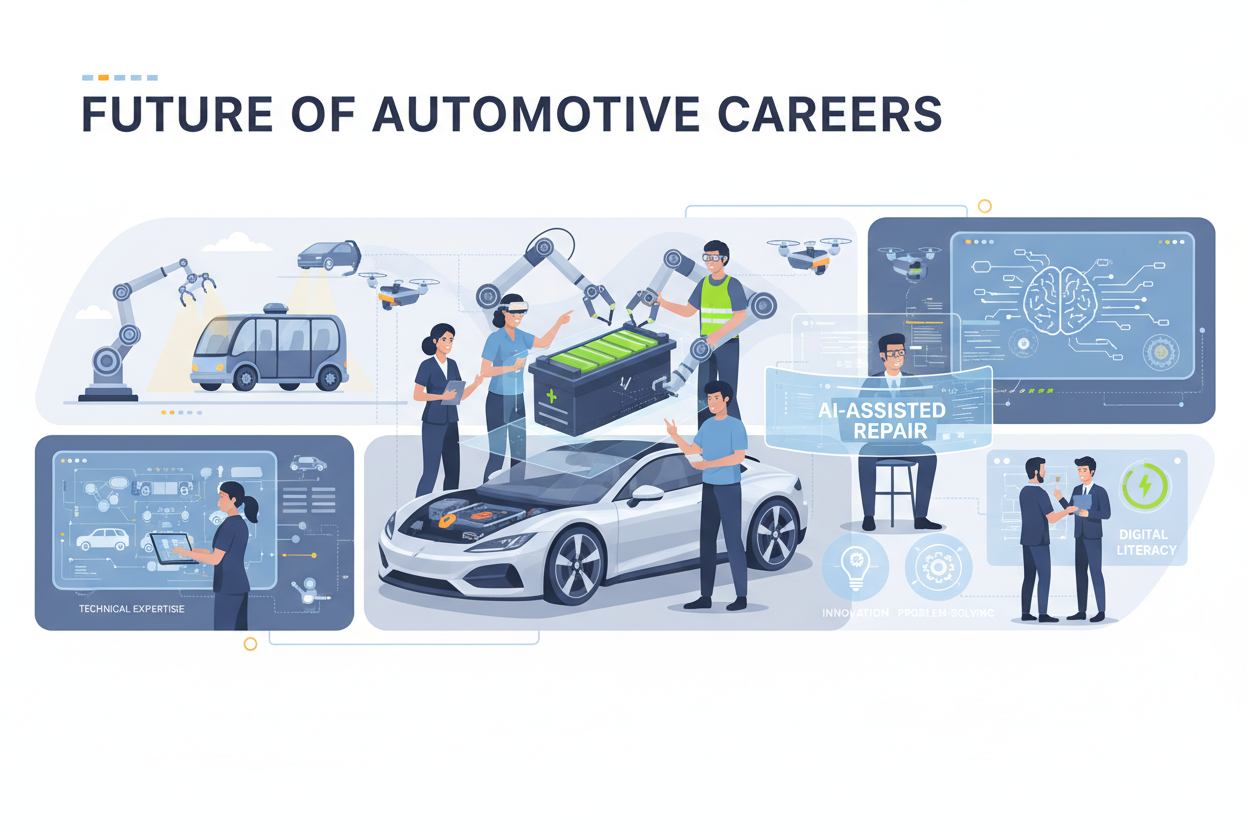
The automotive industry is evolving rapidly due to technological advancements, sustainability demands, and the rise of remote work. Key skills for future professionals include data analysis, electric powertrain knowledge, strong communication, adaptability, and resource management. Continuous learning and an entrepreneurial mindset are essential, as is proficiency in collaboration tools. A multidisciplinary approach that combines engineering principles with business acumen will be crucial for success in this dynamic field.
Frequently Asked Questions
1. What are the key technological skills needed for the future of automotive jobs?
2. Why are soft skills important in the automotive industry?
3. How does sustainability impact skills required in the automotive sector?
4. What role does continuous learning play in automotive careers?
5. How is the gig economy affecting skills needed in the automotive industry?
The automotive industry is undergoing a transformation like never before. With advancements in technology and a growing emphasis on sustainability, the workforce must evolve to meet the demands of this shifting landscape. Understanding the skills that will be necessary for tomorrow's automotive jobs is critical for both aspiring professionals and seasoned workers. In this blog post, we will delve into the future of automotive jobs and highlight the essential skills that will shape the workforce of tomorrow. Whether you are a student considering a career in the automotive sector or a veteran seeking to upskill, this guide will provide valuable insights into the industry's future.
1. Embracing Technological Advancements
The automotive sector is at the forefront of technological evolution, driven by innovations such as electric vehicles (EVs), autonomous driving, and connectivity. As these technologies become more prevalent, the skills needed to operate and manage them will change drastically. Here are some critical tech-related skills to focus on:
1.1 Data Analysis
Data analytics is rapidly becoming one of the most sought-after skills in the automotive industry. With the advent of connected cars and smart technologies, vast amounts of data are generated daily. Professionals who can analyze and interpret this data will be invaluable in making data-driven decisions related to vehicle performance, customer preferences, and market trends.
1.2 Understanding Electric Powertrains
With the global shift towards electric vehicles, knowledge of electric powertrains, battery technologies, and energy management systems is crucial. Professionals with expertise in these areas will be in high demand, particularly as more automotive firms transition from internal combustion engines to electric drivetrains.
2. Soft Skills Matter
While technical skills are essential, soft skills play a crucial role in ensuring success within the automotive industry. Here are some key soft skills professionals should focus on:
2.1 Communication
As vehicles become more technologically complex, communication within and between teams is imperative. Being able to communicate technical concepts to non-technical stakeholders will be a valuable asset. This skill will facilitate better collaboration between engineers, developers, and managers.
2.2 Adaptability
The automotive field is changing rapidly, requiring workers to be flexible and open to change. Those who can quickly adapt to new technologies, processes, and market demands will be better positioned for longevity in their careers.
3. The Role of Sustainability
With a growing focus on environmental responsibility, sustainability will be a key driver of change in the automotive sector. Professionals must understand and implement sustainable practices, as well as analyze their environmental impacts. Skills related to sustainability include:
3.1 Resource Management
Understanding how to manage materials and resources efficiently is essential as companies work to reduce waste and enhance sustainability. This includes knowledge of recycling processes, supply chain management, and lifecycle assessment.
3.2 Renewable Energy Systems
As the industry sees a surge in hybrid and electric vehicles, knowledge of renewable energy sources and their application in the automotive field is essential. This competency can lead to roles in the design and implementation of charging infrastructure and energy-efficient solutions.
4. Importance of Continuous Learning
In an evolving industry like automotive, continuous learning is key to remaining competitive. Here’s how professionals can make learning a priority:
4.1 Online Courses and Certifications
Online platforms offer a plethora of courses on various aspects of automotive technology and business management. Obtaining certifications relevant to your field can bolster your resume and signal your commitment to personal growth.
4.2 Networking and Industry Events
Attending industry conferences, trade shows, and workshops can provide insights into emerging trends and foster connections with industry professionals. Networking can lead to mentorship opportunities and encourage exchanges of ideas that fuel innovation.
5. The Growth of the Gig Economy in Automotive
The gig economy is on the rise, and the automotive industry is no exception. Freelancers and contractors are becoming increasingly prevalent, offering flexible solutions to meet the evolving needs of businesses. Key skills for success in this environment include:
5.1 Entrepreneurial Mindset
Workers who embrace an entrepreneurial mindset will find success in the gig economy. This involves being proactive, innovative, and resourceful. Those with the ability to think creatively and take calculated risks will thrive in this changing landscape.
5.2 Marketing and Branding Skills
As gig workers in automotive carve their own paths, understanding how to market themselves and their services becomes crucial. Skills in social media marketing, personal branding, and networking can significantly enhance visibility and opportunities.
6. Remote Work and Virtual Collaboration
The COVID-19 pandemic has accelerated the trend toward remote work, and this is unlikely to reverse even after its peak. For automotive professionals, embracing remote collaboration tools and methodologies is essential. Key skills include:
6.1 Proficiency in Collaboration Tools
As teams increasingly rely on digital platforms for communication and project management, being proficient in tools like Slack, Zoom, and Asana can set you apart. Understanding how to navigate these platforms effectively is key to successful collaboration.
6.2 Self-Discipline and Time Management
Remote work requires a high level of self-discipline and time management skills. Being able to prioritize tasks and maintain focus in a remote environment is critical for productivity. Developing a robust routine can help you stay organized and meet deadlines.
7. Robotics and Automation
Robotics and automation are reshaping the manufacturing landscape, and expertise in these areas will be vital for future automotive workers. Skills to develop in this field include:
7.1 Robotics Programming
Understanding how to program and operate robotic systems is increasingly important as many manufacturers integrate automation into their operations. Familiarity with programming languages relevant to robotics, such as Python and C/C++, is an asset.
7.2 Troubleshooting Automated Systems
The ability to diagnose and resolve issues in automated systems will be essential as reliance on machinery grows. This skill requires a keen understanding of both software and hardware components and how they interact.
8. The Need for a Multidisciplinary Skill Set
The complexities of modern vehicles demand that workers possess a range of skills that extend beyond traditional automotive knowledge. Here are some multidisciplinary skills to cultivate:
8.1 Engineering Principles
Grasping fundamental engineering concepts can significantly enhance a professional’s capability in the automotive field. Understanding mechanics, thermodynamics, and materials science will help you tackle various challenges in vehicle design and manufacturing.
8.2 Business Acumen
Understanding the business side of automotive can provide a competitive edge. Skills in finance, marketing, and project management can help bridge the gap between technical knowledge and effective business operations, enabling professionals to position themselves as key contributors.
The Road Ahead
The future of automotive jobs is bright, but it requires a focused approach to skills development and continual learning. Whether you are just starting or looking to enhance your capabilities in this dynamic field, embracing technological advancements, honing soft skills, and prioritizing sustainability will be crucial. Be ready to adapt, grow, and seize the opportunities that lie ahead—your journey in the automotive industry is just beginning!