Overview
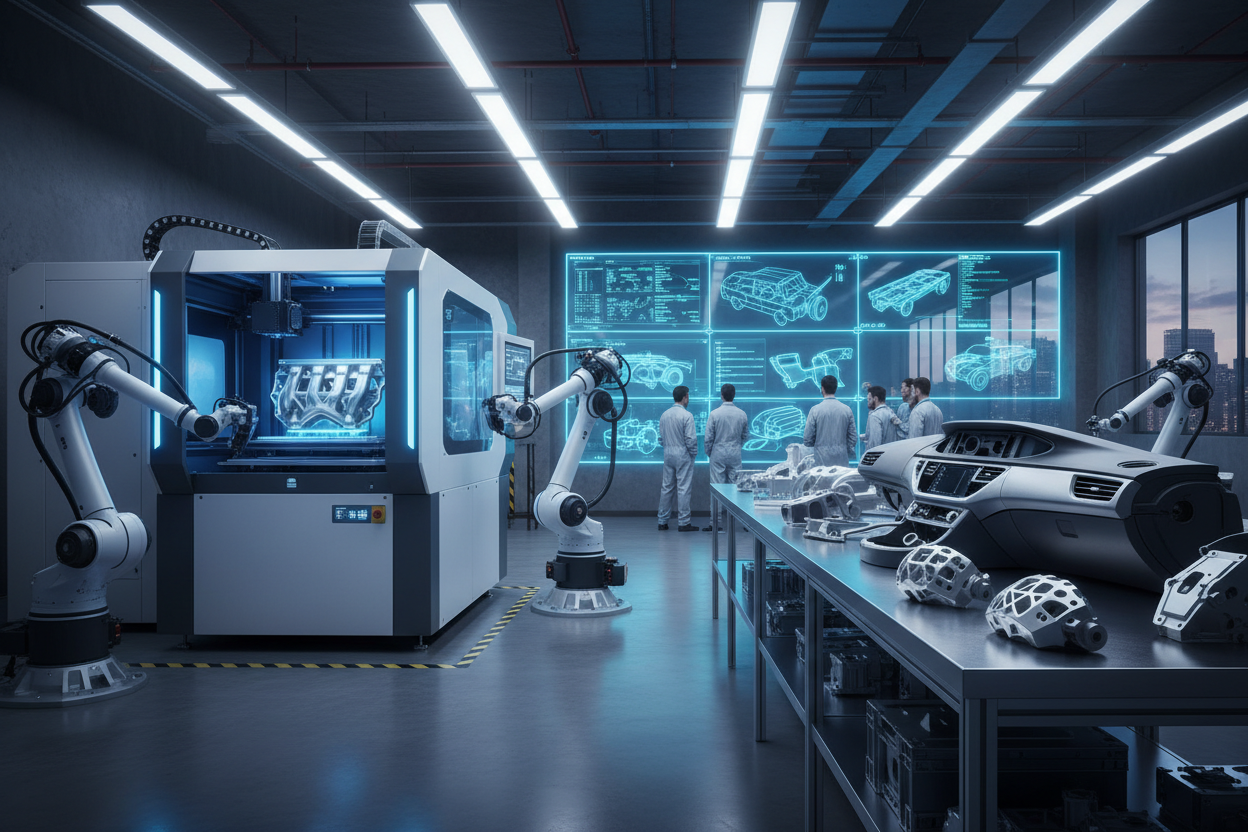
3D printing is revolutionizing the automotive industry by enhancing production efficiency, reducing costs, and enabling rapid prototyping. Key benefits include faster prototyping, on-demand manufacturing, streamlined supply chains, improved safety and performance, and sustainable practices. The future of automotive production is increasingly reliant on 3D printing technology, paving the way for innovations in materials and processes.
Frequently Asked Questions
1. What is 3D printing and how is it relevant to the automotive industry?
2. What are the key techniques used in 3D printing for automotive production?
3. How does 3D printing improve the prototyping process in the automotive industry?
4. What are the benefits of on-demand manufacturing in automotive production through 3D printing?
5. What role does 3D printing play in enhancing safety and performance in vehicles?
The automotive industry is rapidly evolving, driven by technological advancements that are enhancing production efficiency and cutting costs. Among these innovations, 3D printing has emerged as a game-changer, reshaping how cars are designed, prototyped, and manufactured. In this article, we’ll explore the transformative role of 3D printing in automotive production and how it benefits both manufacturers and consumers alike.
Understanding 3D Printing Technology
3D printing, also known as additive manufacturing, involves creating three-dimensional objects from a digital file. This technology layers materials, such as plastic, metal, or resin, to build parts and components. The flexibility and precision of 3D printing make it an attractive option for the automotive sector, offering numerous advantages over traditional manufacturing methods.
Key Techniques in 3D Printing for Automotive
Different 3D printing techniques are utilized in automotive production, each offering unique benefits:
- Stereolithography (SLA): This technique uses a laser to cure resin, allowing for high precision and smooth finishes.
- Fused Deposition Modeling (FDM): FDM involves melting and extruding thermoplastic filaments to create parts layer by layer. It's widely used for prototyping.
- Selective Laser Sintering (SLS): SLS uses a laser to fuse powdered materials into solid structures, ideal for complex geometries.
- Metal Additive Manufacturing: This technique utilizes lasers or electron beams to fuse metallic powders, enabling the production of strong, lightweight components.
Prototyping Revolutionized
Prototyping in the automotive industry has seen a significant revolution thanks to 3D printing. Traditional methods can be time-consuming and costly, but 3D printing allows engineers and designers to create rapid prototypes quickly and affordably. This immediate feedback loop accelerates the design process, enabling manufacturers to iterate and refine designs in record time.
Benefits of 3D Printing for Prototyping
- Speed: 3D printing drastically reduces the time needed to create prototypes—from weeks to just days.
- Cost-effectiveness: By minimizing material waste, 3D printing can lower production costs, allowing companies to allocate resources elsewhere.
- Design Freedom: Complex geometries and customized designs can be realized without the limitations of traditional manufacturing techniques.
Enhancing Production Efficiency
3D printing not only transforms prototyping but also enhances production efficiency by enabling on-demand manufacturing. Instead of producing large quantities of parts upfront, manufacturers can produce components as they are needed. This shift leads to reduced inventory costs and minimizes waste, creating a more sustainable manufacturing process.
On-Demand Manufacturing Benefits
- Reduced Inventory: Less excess stock means lower holding costs and a smaller footprint in storage.
- Customization: 3D printing can be used to create tailored solutions for consumers, leading to higher customer satisfaction.
- Resource Allocation: Manufacturers can reallocate resources to focus on innovation instead of warehousing.
Streamlining Supply Chains
The automotive supply chain can be complex and often plagued with delays due to reliance on multiple suppliers for various components. 3D printing simplifies this process by allowing manufacturers to create parts in-house or source them from local suppliers. This shift reduces lead times and transportation costs, making supply chains more resilient.
Local Production and Its Advantages
- Reduced Lead Times: Local production minimizes shipping time and delays.
- Lower Transportation Costs: By producing components nearby, companies can cut logistics expenses.
- Flexibility: Companies can quickly adapt to market demands and changes in consumer preferences.
Enhancing Safety and Performance
Safety is a top priority within the automotive industry, and 3D printing plays a crucial role in improving both safety and performance of vehicles. Components made using 3D printing can be optimized for strength and weight, leading to enhanced vehicle performance. Moreover, the ability to test and validate designs through rapid prototyping ensures that safety standards are met before mass production.
Optimized Components for Better Performance
Through simulation and analysis, engineers can optimize parts for specific performance characteristics. For instance, lighter components can lead to better fuel efficiency, while stronger components can enhance crash safety. The iterative nature of 3D printing allows for ongoing improvements as new technologies and materials become available.
Leading Towards Sustainability
As the automotive industry faces increasing pressure to reduce its carbon footprint, 3D printing is proving to be a crucial ally. Not only does the technology reduce waste during production, but it also enables more sustainable design practices. For instance, manufacturers can use recycled materials or biodegradable filaments to create parts, aligning with eco-friendly initiatives.
Sustainable Practices with 3D Printing
- Resource Efficiency: The additive nature of 3D printing minimizes excess material waste, leading to a more sustainable process.
- Recycling Materials: Many automotive manufacturers are exploring the use of recycled plastics and metals in their 3D printing operations.
- Reduced Emissions: Localized production reduces transportation needs, leading to lower greenhouse gas emissions.
The Future of 3D Printing in Automotive Production
The future of automotive production is undoubtedly intertwined with 3D printing technology. As advancements continue to unfold, manufacturers will explore new materials, techniques, and applications that further enhance efficiency, safety, and sustainability. The adoption of 3D printing is expected to become more widespread across various segments of the automotive industry, including electric vehicles (EVs) and autonomous vehicles.
Innovations on the Horizon
Future innovations may include the integration of artificial intelligence (AI) with 3D printing, leading to smarter production processes. Additionally, the development of advanced materials such as carbon fiber composites and smart materials will open up new possibilities, allowing manufacturers to produce parts with unparalleled performance characteristics.
Feeling Inspired?
As we look ahead, it’s clear that 3D printing will continue to shape the automotive landscape, driving innovation and efficiency while providing manufacturers the tools they need to meet evolving consumer demands. Whether you’re a part of the automotive industry or a passionate enthusiast, embracing these changes could be the key to unlocking the future.
