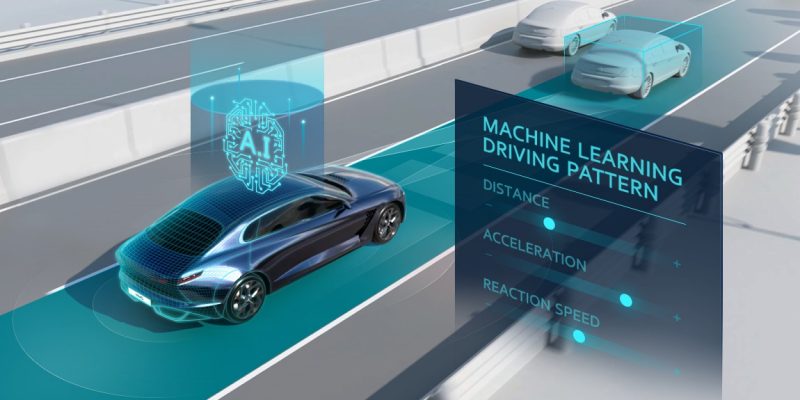
When it comes to car troubles, we've all been there. That dreaded moment when the check engine light illuminates on your dashboard, sending shivers down your spine. It's like a silent cry for help from your car, leaving you wondering what could possibly be wrong this time. But fear not, because the future of car diagnostics is here, and it goes by the name of machine learning.
Machine learning, a subset of artificial intelligence, has already made significant waves in various industries, from healthcare to finance. And now, it's making its mark on the automotive world, transforming the way we diagnose and fix car problems. Gone are the days of relying solely on the expertise of human mechanics. With machine learning, we're entering a new era of precision and efficiency.
So, what exactly is machine learning?
Machine learning is a branch of artificial intelligence that enables computers to learn and make decisions without being explicitly programmed. It involves using algorithms and statistical models to analyze large amounts of data, identify patterns, and make predictions or take actions based on that data. In the context of car diagnostics, machine learning algorithms can analyze vast amounts of car data to detect issues, predict failures, and recommend the most effective solutions.
The benefits of machine learning in car diagnostics
1. Improved accuracy: Machine learning algorithms can analyze data from various sensors and systems in a car to accurately diagnose problems. By considering multiple factors simultaneously, machine learning can provide more accurate diagnoses compared to traditional diagnostic methods.
2. Faster problem resolution: With machine learning, cars can diagnose themselves in real-time, eliminating the need for time-consuming manual inspections. This means mechanics can quickly identify and fix issues, reducing downtime and getting you back on the road faster.
3. Cost-effective solutions: Machine learning algorithms can analyze historical data to identify common issues and recommend cost-effective solutions. This can help car owners save money by avoiding unnecessary repairs or replacing parts that are still in good condition.
4. Preventive maintenance: Machine learning can predict potential failures by analyzing data from various sensors and systems in a car. This allows car owners to proactively address issues before they become major problems, preventing breakdowns and costly repairs.
Real-life applications of machine learning in car diagnostics
1. Onboard diagnostics: Many modern cars are equipped with onboard diagnostic systems that continuously monitor various parameters, such as engine performance, emissions, and sensor readings. Machine learning algorithms can analyze this data to detect abnormalities and alert car owners or mechanics to potential issues.
2. Remote diagnostics: Machine learning can enable remote diagnostics, where car data is transmitted to a central server for analysis. This allows mechanics to diagnose problems without physically inspecting the car, saving time and resources.
3. Predictive maintenance: By analyzing data from sensors and systems, machine learning algorithms can predict when certain components are likely to fail. This enables car owners to schedule maintenance or replacement of those components before they cause a breakdown.
The future of car diagnostics
As machine learning continues to evolve, so too does its potential to revolutionize car diagnostics. We can expect even more advanced algorithms that can analyze complex data and provide even more accurate and timely diagnoses. With the rise of connected cars and the Internet of Things, machine learning will play a crucial role in ensuring our vehicles stay in optimal condition.
Imagine a world where your car can detect a potential issue before it even happens and notify you with a friendly reminder to schedule maintenance. Or a world where mechanics can remotely diagnose and fix your car without you having to leave the comfort of your home. That future is not far away.
Embrace the power of machine learning in car diagnostics
The role of machine learning in car diagnostics is not just a buzzword or a passing trend. It's a game-changer that is already transforming the way we fix our cars. Whether it's improving accuracy, speeding up problem resolution, or enabling preventive maintenance, machine learning is paving the way for a more efficient and reliable automotive industry.
So, the next time that check engine light taunts you, remember that machine learning is on your side. It's working tirelessly behind the scenes, analyzing data and helping mechanics provide the best possible solutions. With machine learning, car diagnostics will never be the same again.