
Overview
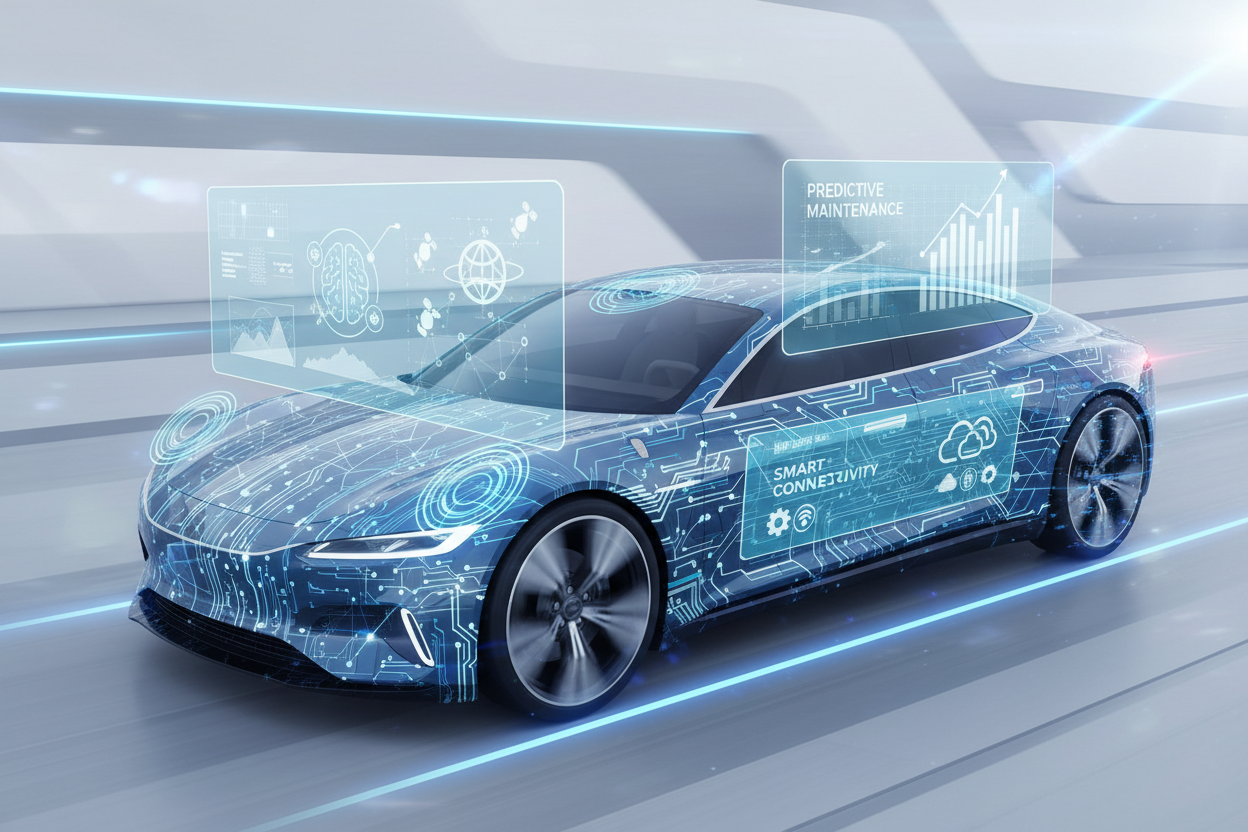
AI is transforming the automotive industry through enhanced manufacturing efficiency, improved vehicle safety, the rise of autonomous vehicles, personalized customer experiences, and sustainability efforts. Key advancements include predictive maintenance, driver assistance systems, and smart energy management. However, challenges like data privacy, job displacement, and regulatory issues remain. The future promises wider adoption of autonomous vehicles and integration with smart cities, making AI essential for growth and innovation in the sector.
Table of Contents
- Understanding AI and Its Relevance
- AI in Automotive Manufacturing
- Enhancing Vehicle Safety with AI
- Driver Assistance Systems
- Predictive Analytics for Road Safety
- Automated Emergency Response
- The Rise of Autonomous Vehicles
- Machine Learning and Environment Recognition
- Simulations for Safer Testing
- Redefining the Customer Experience
- AI-Driven Customer Insights
- Chatbots and Virtual Assistants
- The Sustainability Factor
- Energy Management
- Smart Manufacturing Processes
- Challenges and Responsibilities
- Data Privacy Concerns
- Job Displacement
- Regulatory Issues
- What Lies Ahead?
- Join the Revolution!
Frequently Asked Questions
1. How is AI transforming the automotive industry?
2. What are some applications of AI in automotive manufacturing?
3. How does AI improve vehicle safety?
4. What role does AI play in autonomous vehicles?
5. What are the challenges associated with AI in the automotive industry?
The automotive industry is undergoing a seismic shift, largely driven by advancements in artificial intelligence (AI). From enhancing manufacturing processes to boosting vehicle safety and enabling autonomous driving, the ramifications of AI are profound and transformative. This article will delve into the diverse ways AI is shaping the automotive landscape today, helping brands like those listed on carbreakers.ie thrive in this innovative era.
Understanding AI and Its Relevance
Artificial intelligence refers to the simulation of human intelligence in machines that are programmed to think and learn like humans. In the automotive sector, AI's influence is observable across numerous processes and applications. Understanding its significance is crucial, especially for businesses looking to leverage technology for growth.
AI in Automotive Manufacturing
The manufacturing process is one of the primary areas where AI is making waves. Here are some ways AI is streamlining manufacturing:
- Predictive Maintenance: AI algorithms analyze data from machinery to predict when maintenance should be performed. This minimizes downtime and reduces costs.
- Quality Control: With machine learning, AI systems can detect defects and inconsistencies better than the human eye, enhancing product quality.
- Supply Chain Optimization: AI helps in optimizing supply chain operations by predicting demand trends and managing inventory levels more effectively.
These advancements not only increase operational efficiency but also help companies maintain competitive pricing, which is vital in today’s market.
Enhancing Vehicle Safety with AI
In the realm of safety, AI is leading the charge in making vehicles safer for drivers and passengers alike. Several AI-driven safety technologies are already available:
Driver Assistance Systems
Vehicles equipped with AI-powered driver assistance systems come with features such as adaptive cruise control, lane-keeping assistance, and automatic emergency braking. These capabilities significantly reduce the likelihood of accidents and save lives.
Predictive Analytics for Road Safety
AI can analyze vast amounts of data collected from various sources, such as traffic patterns and environmental conditions. By integrating this data, manufacturers can devise smarter safety features that anticipate possible dangers, allowing for risk mitigation before issues arise.
Automated Emergency Response
Some advanced AI systems can detect when an accident occurs and automatically alert emergency services, ensuring rapid response times, which is critical for saving lives.
The Rise of Autonomous Vehicles
The concept of fully self-driving cars has been a topic of fascination for decades. However, advancements in AI have brought this once-distant dream closer to reality. Key components include:
Machine Learning and Environment Recognition
Using complex algorithms, AI learns to interpret real-time data from the vehicle’s surroundings. This includes recognizing traffic signals, pedestrians, and road conditions, thereby facilitating decision-making processes in real-time.
Simulations for Safer Testing
Testing autonomous vehicle systems is critical to safety. AI-powered simulations allow manufacturers to scrutinize vehicle responses under numerous scenarios without the risks associated with real-world testing.
Redefining the Customer Experience
AI is also redefining how consumers interact with automotive brands. Personalized experiences are becoming a norm, making the customer journey more enjoyable.
AI-Driven Customer Insights
Automakers can use AI to analyze customer data to derive insights about preferences, purchasing behavior, and demographics. This information allows for personalized marketing strategies and product recommendations.
Chatbots and Virtual Assistants
AI-powered chatbots are increasingly popular for enhancing customer service. These virtual assistants can provide instant responses to queries, guide users through purchasing processes, and collect valuable feedback on consumer satisfaction.
The Sustainability Factor
AI also plays a crucial role in promoting sustainability within the automotive industry. By enhancing efficiency and reducing waste, firms can contribute to a cleaner environment.
Energy Management
In electric vehicles, AI can optimize energy consumption based on driving habits and external conditions. This management leads to longer battery life and reduces the vehicle's carbon footprint.
Smart Manufacturing Processes
AI algorithms can help identify the most efficient methods of production and materials that lead to less waste, promoting sustainability without sacrificing quality.
Challenges and Responsibilities
While the impact of AI on the automotive industry is largely positive, several challenges must be addressed:
Data Privacy Concerns
As vehicles collect and analyze personal data, ensuring the privacy of users becomes paramount. Manufacturers need to develop secure systems that protect consumer information.
Job Displacement
The rise of automation may lead to job losses in some sectors. It is vital for companies to find a balance between leveraging AI and maintaining human employment, including retraining and upskilling initiatives.
Regulatory Issues
As with any new technology, regulations must evolve to keep pace with AI advancements. Stakeholders must collaborate to create frameworks that ensure safe and fair implementation.
What Lies Ahead?
The automotive industry is at the forefront of technological innovation, and AI will undoubtedly play an ever-increasing role in its evolution. Here are a few predictions for the future:
- Widespread Adoption of Autonomous Vehicles: Regulations and technology will continue to evolve, leading to an increase in the adoption rate of fully autonomous vehicles.
- Integration with Smart Cities: Future vehicles will communicate with urban infrastructure, enabling improved traffic flow and reduced congestion.
- Enhanced User Experience: The integration of AI will continue to personalize driving experiences, from entertainment systems to custom maintenance schedules.
As the landscape of the automotive industry changes, it is imperative for brands to stay informed and innovate accordingly. Transformative technology like AI is not merely a trend—it’s a cornerstone for future growth and sustainability.
Join the Revolution!
The impact of AI on the automotive industry is both significant and thrilling. Whether you're a manufacturer, consumer, or enthusiast, staying abreast of these developments will only serve you well. As we steer into the future, embracing AI’s advantages can help businesses flourish, making roads safer and vehicles smarter for everyone. Explore the potential of AI and see how it can transform your experience in the automotive world today!
Glossary
| Term | Meaning |
|---|---|
| Artificial Intelligence (AI) | Simulation of human intelligence in machines for learning and decision-making. |
| Predictive Maintenance | Using AI to forecast when machinery needs maintenance, reducing downtime. |
| Quality Control | AI systems detect defects in products more accurately than humans. |
| Driver Assistance Systems | AI features that enhance vehicle safety, like automatic braking and lane-keeping. |
| Predictive Analytics | Analyzing data to anticipate potential road safety issues. |
| Machine Learning | AI's ability to learn from data and improve over time without explicit programming. |
| Chatbots | AI-driven virtual assistants that enhance customer service through instant responses. |
| Energy Management | AI optimizing energy use in electric vehicles for better efficiency. |
| Data Privacy | Ensuring the protection of personal data collected by vehicles. |
| Autonomous Vehicles | Self-driving cars that use AI to navigate without human intervention. |