
Overview
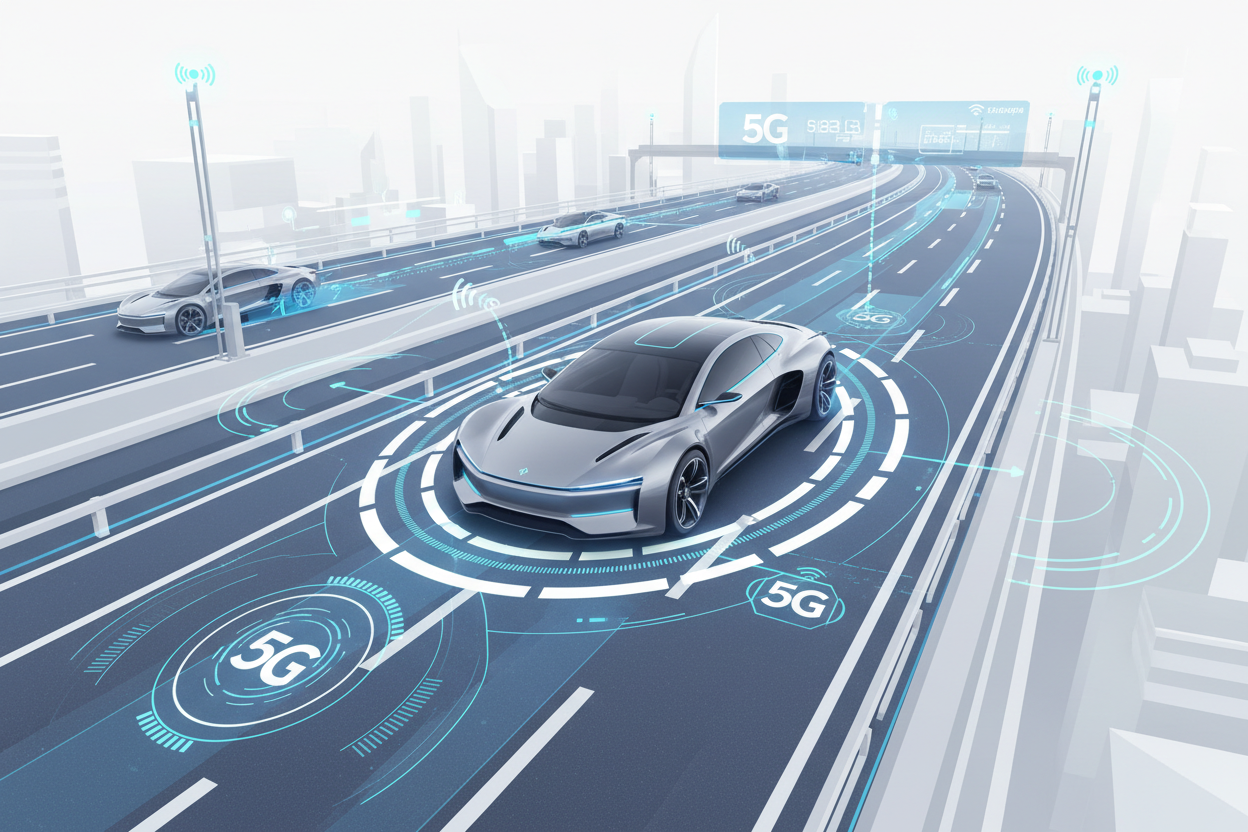
5G technology is set to revolutionize the automotive industry by enhancing vehicle communication, improving safety features, supporting autonomous driving, and transforming in-car entertainment. While it promises numerous benefits, challenges such as infrastructure requirements and security concerns must be addressed. Collaboration among manufacturers, tech developers, and governments will be essential for leveraging 5G's full potential in vehicle communication.
Table of Contents
- What is 5G and Why Does It Matter?
- The Evolution of Vehicle Communication
- The Role of 5G in Modern Vehicles
- Enhanced Safety Features
- Autonomous Driving
- Entertainment and Infotainment Revolution
- Data Collection and Personalization
- Challenges in Implementing 5G in Vehicles
- Infrastructure and Deployment
- Security Concerns
- The Future of Vehicle Communication with 5G
- Collaboration Will Drive Innovation
- Charting the Course Ahead
Key Takeaways
- 5G Technology: Represents the latest standard in mobile communication, offering faster speeds, lower latency, and greater capacity for vehicles.
- Enhanced Safety: 5G enables real-time vehicle communication, improving collision avoidance, traffic management, and emergency response times.
- Autonomous Driving: Supports real-time data processing and cloud computing, bringing fully autonomous vehicles closer to reality.
- Passenger Entertainment: High-speed connectivity allows for streaming services, augmented reality experiences, and seamless device integration in vehicles.
- Data Collection: Facilitates driver behavior analysis and predictive maintenance, enhancing user experience and safety.
- Infrastructure Challenges: Effective 5G deployment requires extensive infrastructure, including expanded network coverage and significant investment costs.
- Security Concerns: Increased connectivity raises risks of cyber-attacks, highlighting the need for robust data privacy and system security measures.
Frequently Asked Questions
1. What is 5G and why is it important for vehicles?
2. How does 5G improve safety features in vehicles?
3. What role does 5G play in autonomous driving?
4. What are some entertainment benefits of 5G in vehicles?
5. What challenges are associated with implementing 5G in vehicles?
The automotive industry is on the brink of a technological renaissance, fueled by the advent of 5G networks. While many may associate 5G with faster internet for smartphones, its implications stretch far beyond personal devices—it’s poised to transform vehicular communication and, by extension, the entire driving experience. In this article, we will delve into the profound impact of 5G on vehicle communication, exploring its benefits, challenges, and future potential. Buckle up as we navigate through this exciting terrain!
What is 5G and Why Does It Matter?
5G, or fifth-generation wireless technology, is the latest standard in mobile communications. Promising lightning-fast download and upload speeds, lower latency, and greater capacity compared to its predecessors, 5G is designed to support a plethora of devices simultaneously. This advancement makes it particularly essential for the ever-growing demand for connectivity in vehicles.
The Evolution of Vehicle Communication
Before we dive into 5G's impact, it’s essential to understand the evolution of vehicle communication technologies. From the early days of basic radio systems to the introduction of GPS, technology has drastically changed how vehicles communicate with both their drivers and the surrounding environment. The enhancement in communication protocols—such as V2V (Vehicle-to-Vehicle), V2I (Vehicle-to-Infrastructure), and V2X (Vehicle-to-Everything)—has laid the groundwork for the seamless integration of 5G.
The Role of 5G in Modern Vehicles
5G technology offers unprecedented opportunities for vehicles to communicate not only with one another but also with road infrastructure, traffic management systems, and even pedestrians. Let’s explore some of the transformative capabilities that 5G is bringing to the automotive sector:
Enhanced Safety Features
One of the most significant advantages of 5G technology in vehicles is enhanced safety. With ultra-reliable low-latency communication (URLLC), cars can communicate with each other and their surroundings in real-time. Here are a few aspects where safety is improved:
- Collision Avoidance: Vehicles can share information about their speed, direction, and road conditions, allowing them to react quickly to potential hazards.
- Traffic Management: 5G enables vehicles to receive real-time updates on traffic conditions, which can help prevent congestion and accidents.
- Emergency Response: In case of an accident, vehicles can automatically alert emergency services with the exact location, leading to quicker response times.
Autonomous Driving
The dream of fully autonomous vehicles is now closer than ever, thanks to the ability of 5G to support the massive data processing required for real-time navigation and decision-making. Here’s how 5G contributes to the advancement of autonomous vehicles:
- Real-Time Data Processing: For an autonomous vehicle to navigate effectively, it requires information about its surroundings, including other vehicles, pedestrians, and road signs, all processed in real-time.
- Cloud Computing: With 5G, data from multiple vehicles can be processed in the cloud, allowing for more complex algorithms that govern driving decisions.
- Remote Control: In some instances, remote operators can assist autonomous vehicles during critical situations, all thanks to the high-speed connectivity of 5G.
Entertainment and Infotainment Revolution
5G is not just about safety and autonomy; it’s also transforming passenger entertainment within vehicles. High-speed connectivity allows for a host of new features in vehicle infotainment systems, such as:
- Streaming Services: Passengers can stream movies, music, and games at high quality, making long journeys more enjoyable.
- Augmented Reality: 5G networks can facilitate AR experiences, where passengers may enjoy live updates on landmarks, navigation prompts, and even uncommon facts during travel.
- Seamless Device Integration: With faster connectivity, devices can connect to the vehicle effortlessly, allowing passengers to manage their experiences from personal devices.
Data Collection and Personalization
5G facilitates the gathering of vast amounts of data from vehicles, which can be used for personalization and enhancement of user experience. Here’s how data collection changes the game:
- Driver Behavior Analysis: Vehicles can analyze driving patterns and preferences, leading to a more tailored driving experience.
- Predictive Maintenance: By constantly monitoring vehicle performance, 5G allows for timely maintenance reminders, potentially preventing breakdowns.
- Smart Insurance: Insurance companies can offer plans based on actual driving data, potentially leading to lower premiums for safe drivers.
Challenges in Implementing 5G in Vehicles
Despite its numerous benefits, the deployment of 5G in vehicle communication is not without challenges. Let’s examine some hurdles that need to be addressed:
Infrastructure and Deployment
For 5G to be truly effective in vehicle communication, extensive infrastructure must be built. This includes:
- Expanded Network Coverage: 5G requires a dense network of small cells and antennas for optimal performance, especially in rural or less-developed areas.
- Investment Costs: The costs associated with deploying 5G infrastructure can be significant, which may slow down adoption.
Security Concerns
As vehicles become more connected, the threat of cyber-attacks increases. Some key points of concern include:
- Data Privacy: With vehicles collecting personal data, ensuring this data is safeguarded against breaches is vital.
- System Vulnerability: The more connected a system, the more points of vulnerability exist for malicious attacks.
The Future of Vehicle Communication with 5G
As we look to the future, the potential of 5G in vehicle communication seems boundless. Here are some anticipated advancements:
- Smart Cities: Integrating 5G with smart city infrastructure will allow vehicles to communicate with traffic lights, road signs, and other elements to enhance urban navigation.
- Sustainable Transportation: Enhanced communication can facilitate better traffic flow, reducing emissions and contributing to greener cities.
- Improved User Experience: Automakers are likely to harness 5G for innovative features that anticipate user wants, transforming the driving experience.
Collaboration Will Drive Innovation
To fully realize the benefits of 5G in vehicle communication, collaboration between automotive manufacturers, technology developers, and government agencies will be crucial. Strong partnerships can help pave the way for cutting-edge innovations that not only enhance vehicle performance but also prioritize user safety and satisfaction.
Charting the Course Ahead
The impact of 5G on vehicle communication is profound and far-reaching. While we are still in the early stages of this technology’s implementation, its potential to revolutionize the automotive landscape cannot be overstated. As we continue to experience advancements in connectivity, safety, and entertainment within vehicles, it is clear that 5G will play a pivotal role in shaping the future of transportation.
Exploring the benefits and challenges of 5G in vehicle communication underscores the importance of innovation and collaboration within the automotive industry. As technology continues to unfold, drivers and passengers alike can look forward to a future where connectivity enhances every journey, making roads safer and driving experiences more enjoyable.
Glossary
| Term | Meaning |
|---|---|
| 5G | Fifth-generation wireless technology offering high-speed connectivity. |
| V2V | Vehicle-to-Vehicle communication for real-time data sharing. |
| V2I | Vehicle-to-Infrastructure communication enhancing traffic management. |
| URLLC | Ultra-Reliable Low-Latency Communication for safety-critical applications. |
| Autonomous Vehicles | Self-driving cars capable of navigating without human intervention. |
| Cloud Computing | Processing data over the internet for enhanced vehicle decision-making. |
| Predictive Maintenance | Using data to anticipate and address vehicle maintenance needs. |
| Smart Cities | Urban areas utilizing technology for improved infrastructure and services. |
| Data Privacy | Protecting personal information collected by connected vehicles. |
| Cybersecurity | Measures to protect vehicles from malicious attacks and data breaches. |