
Overview
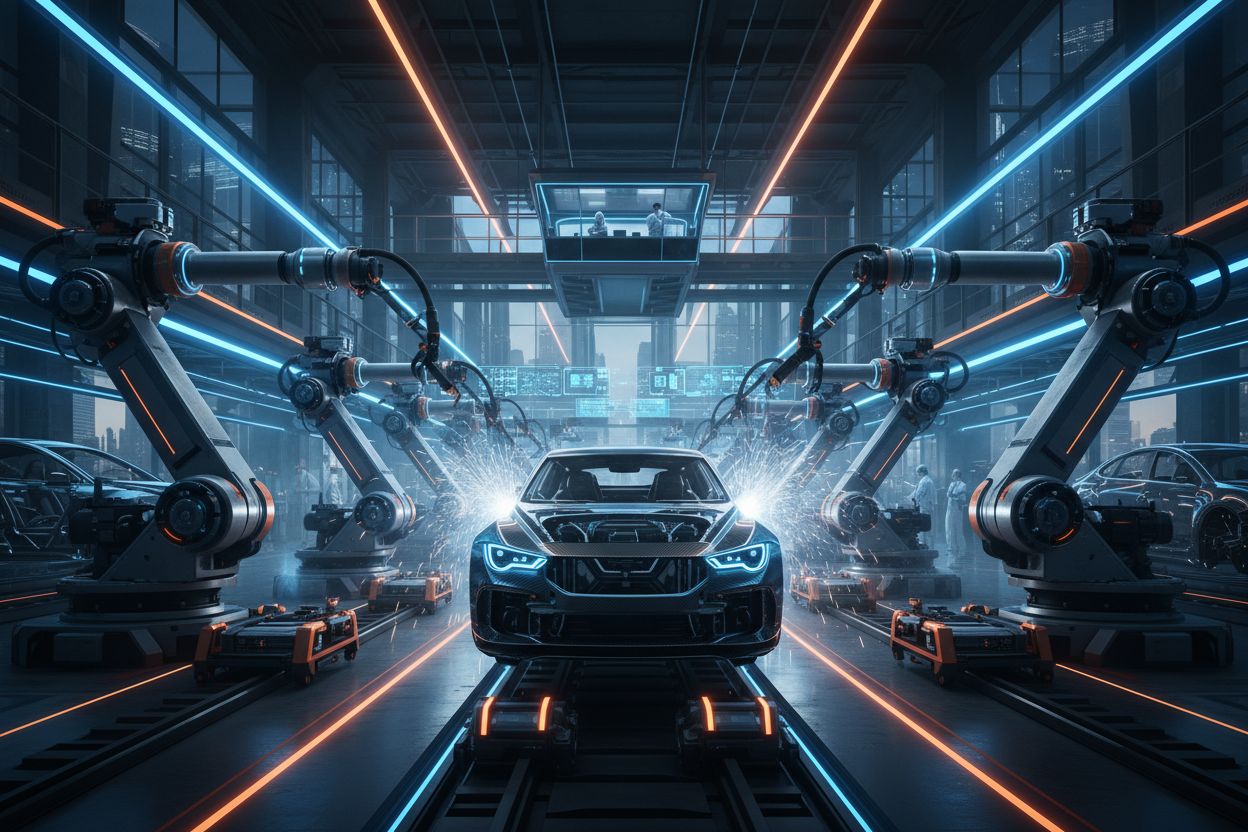
The automotive industry is undergoing a significant transformation driven by robotics, which enhances efficiency, precision, and production speed. As manufacturers face increasing competition and consumer demand for customization, integrating robotics into production lines becomes essential. Robotics improves quality control, streamlines logistics, and supports human workers through collaborative systems. Future trends include AI advancements, increased customization, and eco-friendly practices. However, challenges such as workforce reskilling and high initial investments must be addressed for successful implementation. Embracing robotics is key to innovation and sustainability in automotive manufacturing.
Table of Contents
- The Rise of Robotics in the Automotive Sector
- A Brief History
- Enhancing Efficiency Through Automation
- Increased Speed
- Consistency and Quality Control
- The Versatility of Robotics in Automotive Manufacturing
- Assembly Line Automation
- Material Handling
- Quality Inspection
- Driving Innovation with Collaborative Robots
- Synergistic Workflows
- Safety Enhancements
- The Future of Robotics in Automotive Production
- Artificial Intelligence and Machine Learning
- Increased Customization
- Eco-Friendly Production
- Challenges to Overcome
- Workforce Reskilling
- High Initial Investment
- The Recipe for Success in an Automated Era
Key Takeaways
- Robotics Integration: Robotics in automotive production is essential for enhancing efficiency and adapting to consumer demands.
- Efficiency Gains: Robots significantly reduce cycle times, allowing for faster production compared to human workers.
- Quality Assurance: Robotic systems ensure consistent quality and minimize human error, crucial for safety in automotive manufacturing.
- Collaborative Robots: Cobots work alongside humans, enhancing productivity while prioritizing worker safety through advanced sensors.
- Future Trends: AI and machine learning will improve robot capabilities, enabling smarter decision-making and increased customization in vehicle production.
- Sustainability Focus: Robotics can help minimize waste and promote eco-friendly practices in automotive manufacturing.
- Workforce Reskilling: As robotics take over tasks, training programs are essential to equip workers with new skills for a tech-driven environment.
The automotive industry is experiencing a revolutionary transformation, and at the heart of this change is robotics. Innovations in technology have paved the way for enhanced efficiency, increased precision, and a dramatic reduction in production times. With the growing need for manufacturers to adapt to rapidly changing consumer demands, the integration of robotics into automotive production lines is no longer just an option; it’s a necessity. In this article, we explore the critical role of robotics in automotive production and how these intelligent machines are reshaping the future of the industry.
The Rise of Robotics in the Automotive Sector
As global competition intensifies, automotive manufacturers are consistently seeking ways to improve productivity without compromising quality. Enter robotics—a game-changer in the manufacturing landscape. Here's how robotics entered the scene:
A Brief History
The use of robots in automotive production can be traced back to the 1960s when General Motors integrated the Unimate robot into their assembly line. These early models were capable of lifting heavy components, paving the way for automated tasks that traditionally required human labor. As technology progressed, so did the sophistication of these robotic systems.
Enhancing Efficiency Through Automation
One of the most significant advantages of using robotics in automotive production is the efficiency gained through automation. Here are a few ways robots are optimizing the production process:
Increased Speed
Robots can operate at a much faster pace than humans, significantly reducing cycle times. While a human worker may take several minutes to complete a task, robots can often accomplish the same job in mere seconds. This increased speed translates to higher output and more vehicles rolling off the production line.
Consistency and Quality Control
Robots excel in performing repetitive tasks with unwavering precision. By eliminating human error, manufacturers can ensure uniform quality across products. This consistency is crucial in the automotive sector, where even minor defects can lead to significant safety concerns and costly recalls.
The Versatility of Robotics in Automotive Manufacturing
Robots come in various forms, each tailored to meet specific needs within the automotive industry. Here are a few examples of how robotics is applied across different stages of production:
Assembly Line Automation
Robotic arms are commonly deployed on assembly lines to perform tasks such as welding, fastening, and painting. These specialized robots are programmed to handle complex operations that would be time-consuming for human workers. By automating these processes, manufacturers can reallocate human workers to roles that require critical thinking and problem-solving skills.
Material Handling
Material handling is another crucial aspect of automotive manufacturing. Robots are designed to transport heavy materials, components, and finished products from one location to another. Automated guided vehicles (AGVs) help streamline logistics, reducing the likelihood of injuries and improving overall safety on the shop floor.
Quality Inspection
Quality assurance has always been an integral part of automotive production, and robots are increasingly taking on this role. Utilizing advanced sensors and vision systems, robotic inspection units can detect defects and inconsistencies that might go unnoticed by the human eye. Implementing this technology can lead to better quality products and, ultimately, enhanced customer satisfaction.
Driving Innovation with Collaborative Robots
In recent years, the rise of collaborative robots, or cobots, has further transformed automotive production. Unlike traditional industrial robots that operate independently, cobots are designed to work alongside human workers, enhancing productivity while prioritizing safety. Here’s how cobots are making an impact:
Synergistic Workflows
Cobots are engineered to assist human workers by taking on tasks that are physically strenuous or repetitive. This collaboration ensures that human talent is utilized effectively, allowing skilled workers to focus on tasks requiring creativity and critical thinking while leaving manual labor to the robots.
Safety Enhancements
Safety is paramount in any manufacturing environment. Cobots are equipped with advanced sensors that allow them to detect human presence and adjust their operation accordingly. This feature minimizes the risk of accidents and ensures that human workers can comfortably cohabitate with their robotic counterparts.
The Future of Robotics in Automotive Production
The integration of robotics in automotive production is still evolving, and the horizon brims with exciting possibilities. Here are some trends to watch for:
Artificial Intelligence and Machine Learning
Artificial intelligence (AI) and machine learning are poised to elevate the capabilities of robots considerably. With AI, robots can learn from past performances and improve their operations over time, resulting in smarter decision-making on the production line. This advancement will not only enhance efficiency but also drive innovation in product design and manufacturing processes.
Increased Customization
As consumer preferences continue to shift towards personalization, robotics will play a critical role in producing customized vehicles. Advanced robotic systems will enable manufacturers to create flexible production lines that can adjust to varying requirements, ensuring that every consumer receives a vehicle tailored to their specific desires.
Eco-Friendly Production
Sustainability is increasingly important in the automotive industry. Robotics can help minimize waste through precise manufacturing processes and efficient material usage. Implementing technology that enhances eco-friendly practices can dramatically improve a company's carbon footprint, appealing to environmentally conscious consumers.
Challenges to Overcome
While the benefits of robotics in automotive production are clear, there are challenges manufacturers must face:
Workforce Reskilling
As robotics take over specific tasks, there’s a growing concern about job displacement. However, this shift also presents an opportunity for workforce reskilling. Manufacturers must invest in training programs that equip workers with the skills needed to thrive in a technologically advanced environment, emphasizing the importance of adaptability.
High Initial Investment
Integrating robotic systems can require substantial upfront investment. Not all manufacturers have the same level of financial resources, particularly smaller companies. To overcome this, businesses can explore financing options, partnerships, or phased implementation strategies to gradually incorporate robotics into their operations.
The Recipe for Success in an Automated Era
Embracing robotics in automotive production doesn't merely enhance efficiency; it drives a renaissance of creativity, innovation, and quality in the industry. To navigate this ever-evolving landscape successfully, manufacturers should:
- Invest in employee training and development to build a tech-savvy workforce.
- Stay updated on the latest technological advancements and trends in robotics.
- Ensure that safety protocols are prioritized in conjunction with automation.
- Regularly assess and adapt production strategies to leverage robotic capabilities fully.
- Focus on sustainable practices that align with consumer values.
The adoption of robotics in automotive production signifies more than just mechanization; it represents a substantial shift in how vehicles are designed, manufactured, and delivered to consumers. As we proceed further into this era of innovation, it is clear that the synergy between humans and machines will be the driving force in crafting the vehicles of tomorrow. With the evolution of robotics, the automotive industry is not just keeping pace with change—it's boldly leading the charge towards a smarter and more dynamic future.
Frequently Asked Questions
1. What is the role of robotics in the automotive industry?
2. When did robotics first appear in automotive production?
3. How do robots improve the efficiency of automotive production?
4. What are collaborative robots (cobots) and their benefits in manufacturing?
5. What challenges do manufacturers face when integrating robotics into production?
Glossary
| Term | Meaning |
|---|---|
| Robotics | Technology involving machines capable of performing tasks autonomously. |
| Automation | The use of technology to perform tasks without human intervention. |
| Cobots | Collaborative robots designed to work alongside humans safely. |
| AGVs | Automated guided vehicles used for material transport in manufacturing. |
| Quality Inspection | Process of checking products for defects and ensuring standards. |
| AI | Artificial intelligence that enables machines to learn and adapt. |
| Customization | The ability to tailor products to meet individual consumer preferences. |
| Sustainability | Practices aimed at reducing environmental impact in manufacturing. |
| Reskilling | Training workers to acquire new skills for evolving job demands. |
| Production Line | A sequence of processes where products are assembled or manufactured. |